

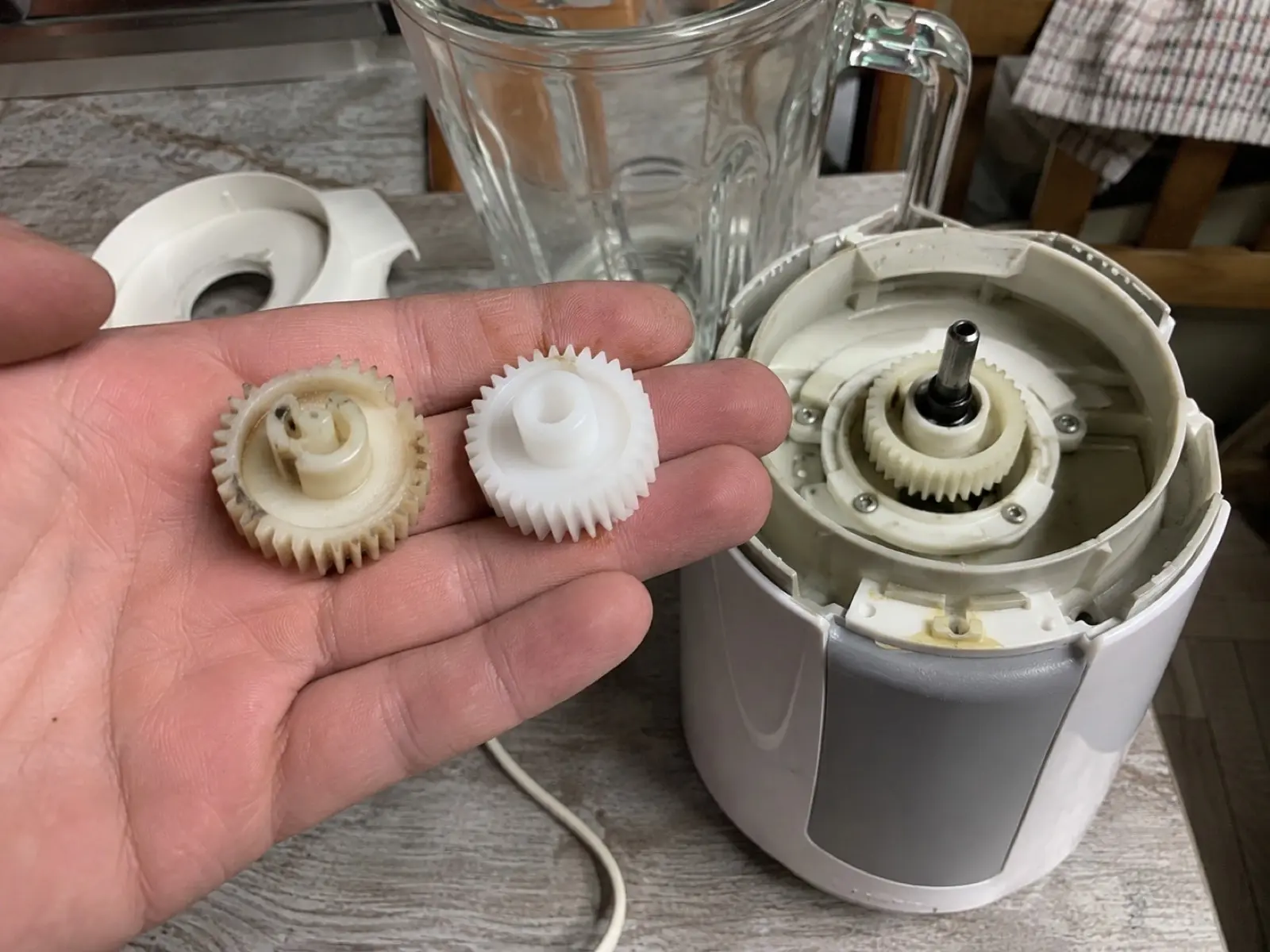
The mixer came from a grandmother's kitchen. Heavy, loud, made in a decade when appliances were built to be repaired, and it had whipped every birthday cake in the family for thirty years. Then one evening the beaters stopped while the motor kept humming. Inside the housing, one small plastic gear had lost half its teeth.
The manufacturer stopped making the part long ago. A new mixer would have cost less than an hour of searching, but that was never the point. This one still worked. It only needed a gear.
Two replacements, two failures
The internet had the gear, or something that looked like it. The first replacement arrived from an online marketplace for a few euros, fitted with a bit of force, and ran fine through the winter. In spring it split across the hub, the thin ring where the gear sits on the shaft. The second one was from a different seller and lasted four months before it did exactly the same thing in exactly the same place.
That is the pattern with cheap copies of an old part. They are cast to the original's shape, in a softer material, and the original's shape was already the weak point. The copy fails where the original failed, only sooner.
A gear that was made, not bought
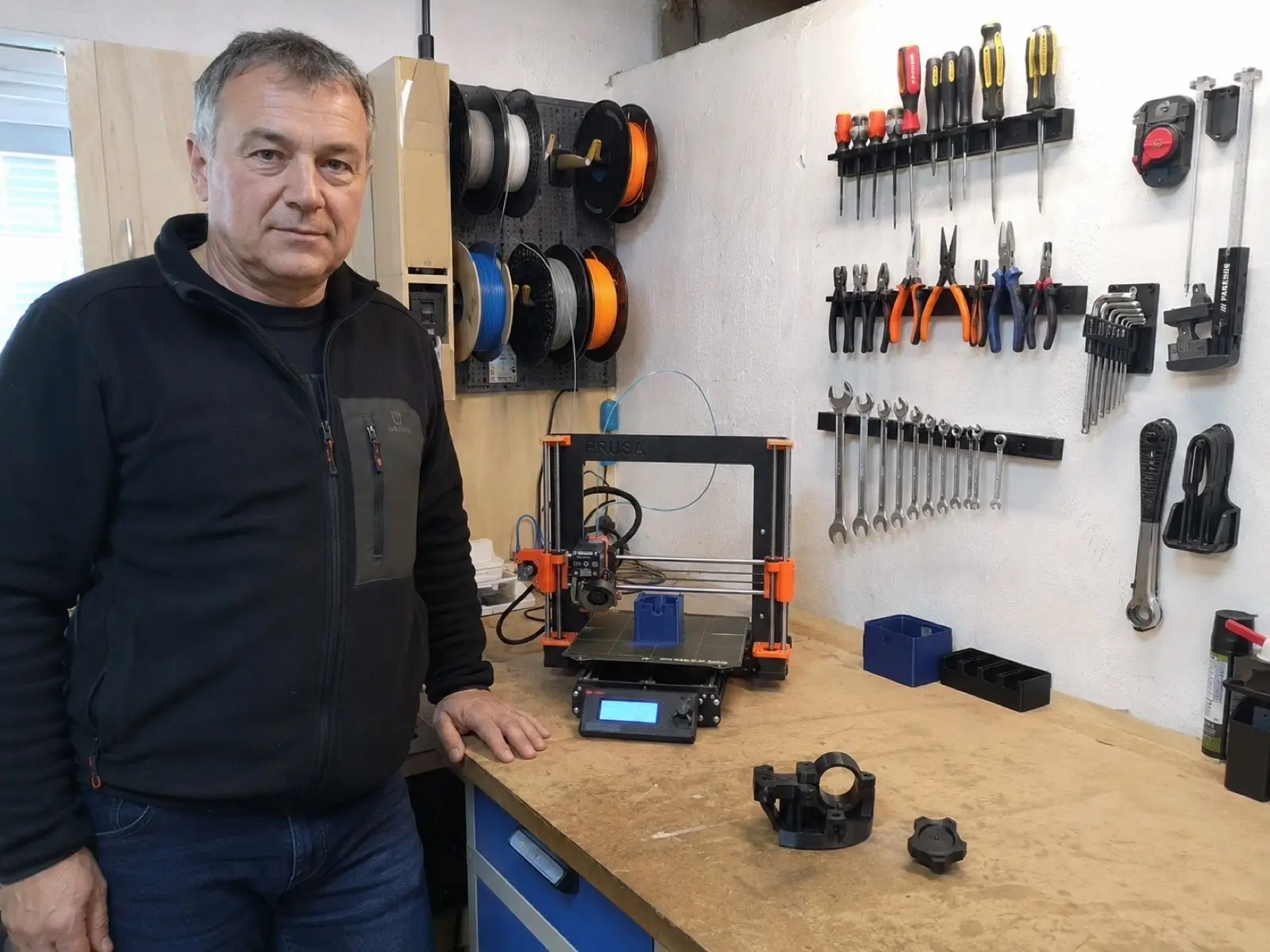
The owner posted a photo of the broken gear on meiker: the two halves in a palm, a ruler beside them. Marek Vozár, who prints and mills replacement parts in Bratislava, answered the same evening. He asked for one more photo, of the shaft the gear sits on, and for the number of teeth.
His offer was not a copy. The new gear would be printed from PETG, a tougher plastic than the original, with the hub made half again as thick, since that was where every previous gear had split. The teeth stayed exactly as the original, so it meshed with the metal gear beside it. The owner brought the broken part to his workshop on a Saturday morning and left with two new ones an hour later. The second is in a drawer, unused.
Why the third one held
A printed part is not automatically stronger than a cast one. What made the difference was that somebody looked at where the old gears had broken and changed the design there. A thicker hub, a rounded inner corner instead of a sharp one, a material chosen for toughness rather than for being cheap to mould. None of that needs a factory. It needs a person who has fixed a hundred small parts and a printer in the next room.
Two years on, the mixer still whips the birthday cakes. The gear has never been looked at again.

Nové ozubené koleso do mixéra, tlačené z PETG

Have a part like this?
If an appliance you like has stopped over one small piece, photograph the broken part next to a ruler and post it. A majster nearby will tell you whether it can be printed or milled, and what it would cost. Most small parts are done within a week.