

Some cars are transport and some are family. The van in this story is the second kind: a Volkswagen Transporter T4 bought second-hand twenty years ago, driven to the seaside every summer, used for two house moves and one wedding. Its owner has been offered money for it more than once and has never taken it.
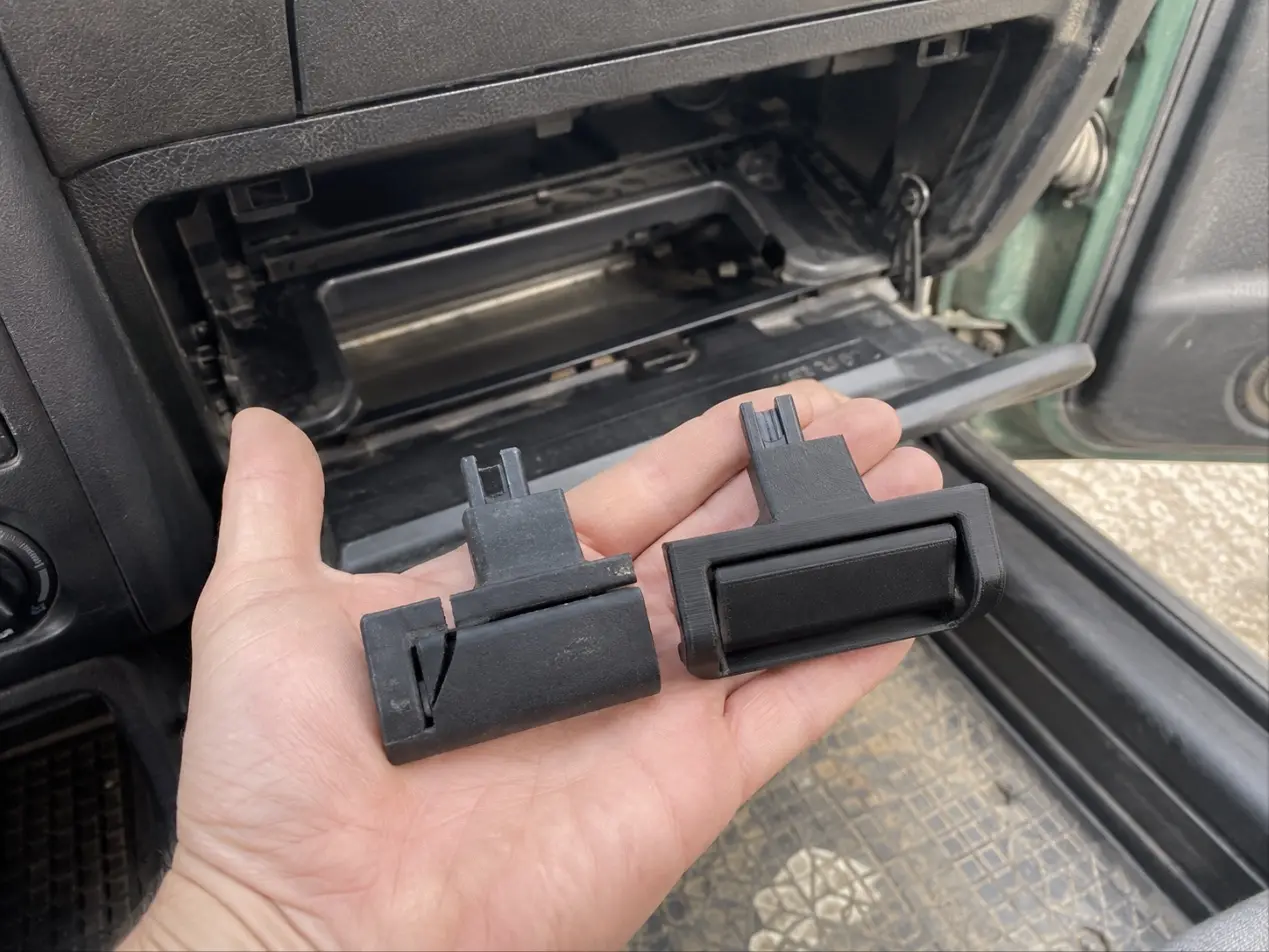
What finally wore out was not the engine. It was a plastic release lever on the glovebox, the little tab you press to open it. After a quarter of a century of thumbs, its neck simply snapped, and the glovebox lid started dropping open on every bump.
The parts that were supposed to fix it
The original lever is no longer made. What is sold instead are aftermarket copies, cheap and quick to arrive. The first one fitted and lasted about three months before it broke at the same thin neck as the original. The second was from a supplier with better reviews and cost twice as much. It broke in five.
The owner took a photo of the three broken levers lying side by side on the van's bench seat. They had all failed in the same spot, at a corner a few millimetres wide, where the original designer had saved a little plastic and nobody since had thought to add it back.
A lever drawn from the broken one
That photo went up on meiker as a request. Martin Hrivnák from Rovinka, who prints replacement clips and trim parts for older cars, replied within the hour. He did not need the lever in his hand to start; the photograph of the three failures told him where the material had to go.
He modelled the lever from the broken original, then changed one thing: the neck was made twice as thick, with a rounded root instead of the sharp inside corner that had started every crack. Printed in black nylon-like plastic, it looked like the original from the driver's seat and nothing like it inside. The owner clipped it in with the van parked outside his flat. It took two minutes. A year and a half later, the glovebox still clicks shut.
Why a copy is not enough
An aftermarket part is made to match the original's drawing, and the drawing is the problem. Manufacturers save material where they can, and a lever that only has to last through the warranty is drawn thinner than one that has to last twenty-five years. A majster who makes one part for one car has no such pressure. He can put back the plastic the drawing left out.
That is the whole difference between buying a replacement and having one made: the person making it has seen how yours broke.

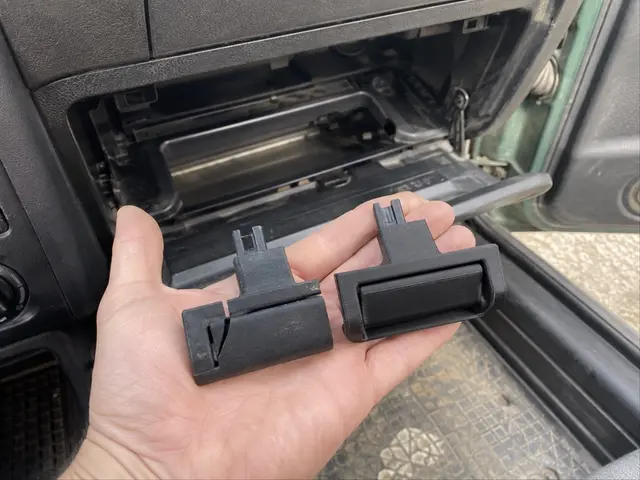
Zlomená kľučka schránky z Transportera T4 a nová tlačená

A broken clip in your own car?
Older cars fail one small piece of plastic at a time: a clip, a lever, a trim end, a switch cover. Photograph the broken piece and the place it came from and post it. A majster nearby can usually print one within the week, and print it stronger than the one that broke.